Jerry Herrington
Summary
In 1991, 16-year-old Jerry Herrington was a talented high school football player who had just completed his freshman year of high school in suburban Cook County when he was wrongfully convicted of a murder he knew nothing about. Chicago police physically and psychologically abused him and lied that he confessed. He spent 29 years wrongfully imprisoned before he was released in 2020, at 45, after serving his full sentence. His full exoneration in 2025 came 34 years after he was convicted.
Interrogation abuses
Jerry's case features hallmark signs of injustice: physical and psychological abuse of a juvenile by law enforcement, interrogation of a juvenile in the absence of an attorney or a parent and the use of a single testimony to create a false “eyewitness identification.”
Evidence shows that Chicago police punched and slapped him while he was handcuffed to the wall and denied his request to call his mother or his grandmother. Officers then reported he had verbally confessed – although he never signed a written confession, and no recording of the interrogation was made. Jerry has always maintained he did not confess.
The only other “evidence” against Jerry put forth by law enforcement was a statement from a 16-year-old informant, who investigators had in their custody, claiming to have seen the shooting. This purported witness gave three very different locations of where he was when the shooting occurred. Jerry’s defense at trial failed to include powerful evidence showing how far these locations were from the crime scene and the obstructed view the individual would have had from those locations.
“The evidence now shows that the police fabricated the testimony by this juvenile informant, who never participated ina lineup,” Leanne said. “The first and only time he identified Jerry as the shooter was in the courtroom from the witness stand.”
Though Jerry was 16, he was tried as an adult and – despite the scant, unreliable evidence against him – sentenced to 60 years in prison. Since then, courts are increasingly recognizing that “children are constitutionally different from adults.” In 2019, the Illinois Supreme Court ruled that a 40-year sentence for a juvenile is effectively a life sentence.
New evidence of innocence
New evidence in Jerry’s case has emerged since his wrongful conviction. Two credible new witnesses came forward stating they saw the shooting and knew the identity of the real perpetrator but were frightened to come forward at the time. Moreover, the officers who investigated this case and abused Jerry are now the subject of numerous allegations regarding systematic misconduct and abuse, as well as fabricated evidence.
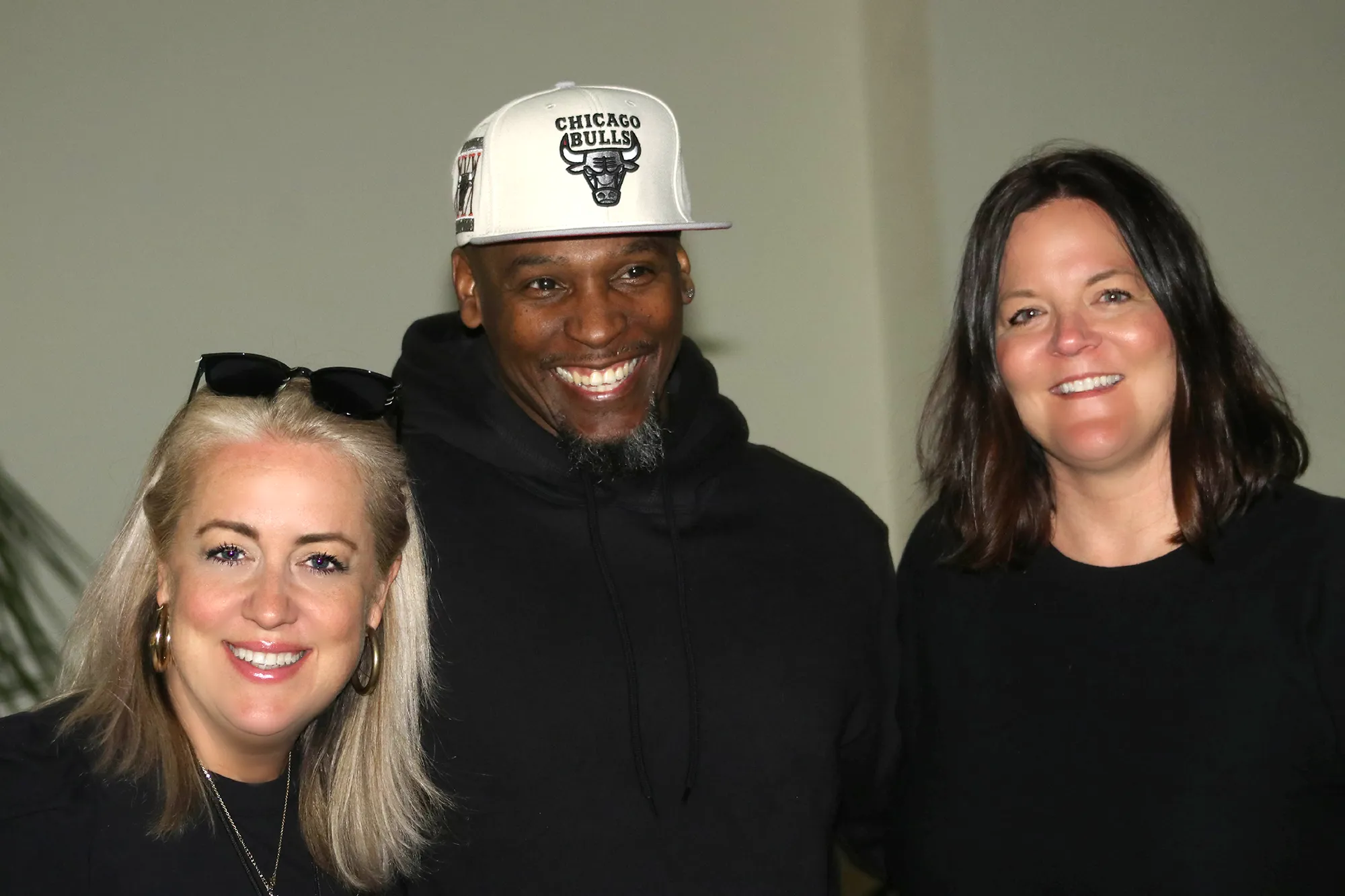
In court, Jerry was represented by Senior Staff Attorney Leanne Beyer, Legal Director Lauren Kaeseberg and Staff Attorney Brandon Klages. Senior Staff Investigator Lynn Bagley provided critical investigation in the case.
“The countless hours IIP staff and students spend in the office and field, miles traveled locating witnesses hidden by the passage of time and words carefully inked on court pleadings are a testament to the complexities faced not only by Jerry in proving his innocence but also for the innocent men and women behind bars attempting to achieve the same,” said Brandon, who began working on Jerry’s case almost eight years ago as a UIS student intern at IIP.
“When Jerry’s case first crossed my desk as an intern, I was barely three years older than he was at the time his nightmare began. I’m so proud to stand with him today – now as a lawyer representing an innocent man who is finally getting his good name back."
A long road
In June 2020, at 45, Jerry completed his sentence and was released from the Illinois Department of Corrections after serving 29 years. This occurred after IIP advocated to have his good time credits properly applied to his sentence. Jerry then was required to serve a term of mandatory supervised release, which he completed successfully.
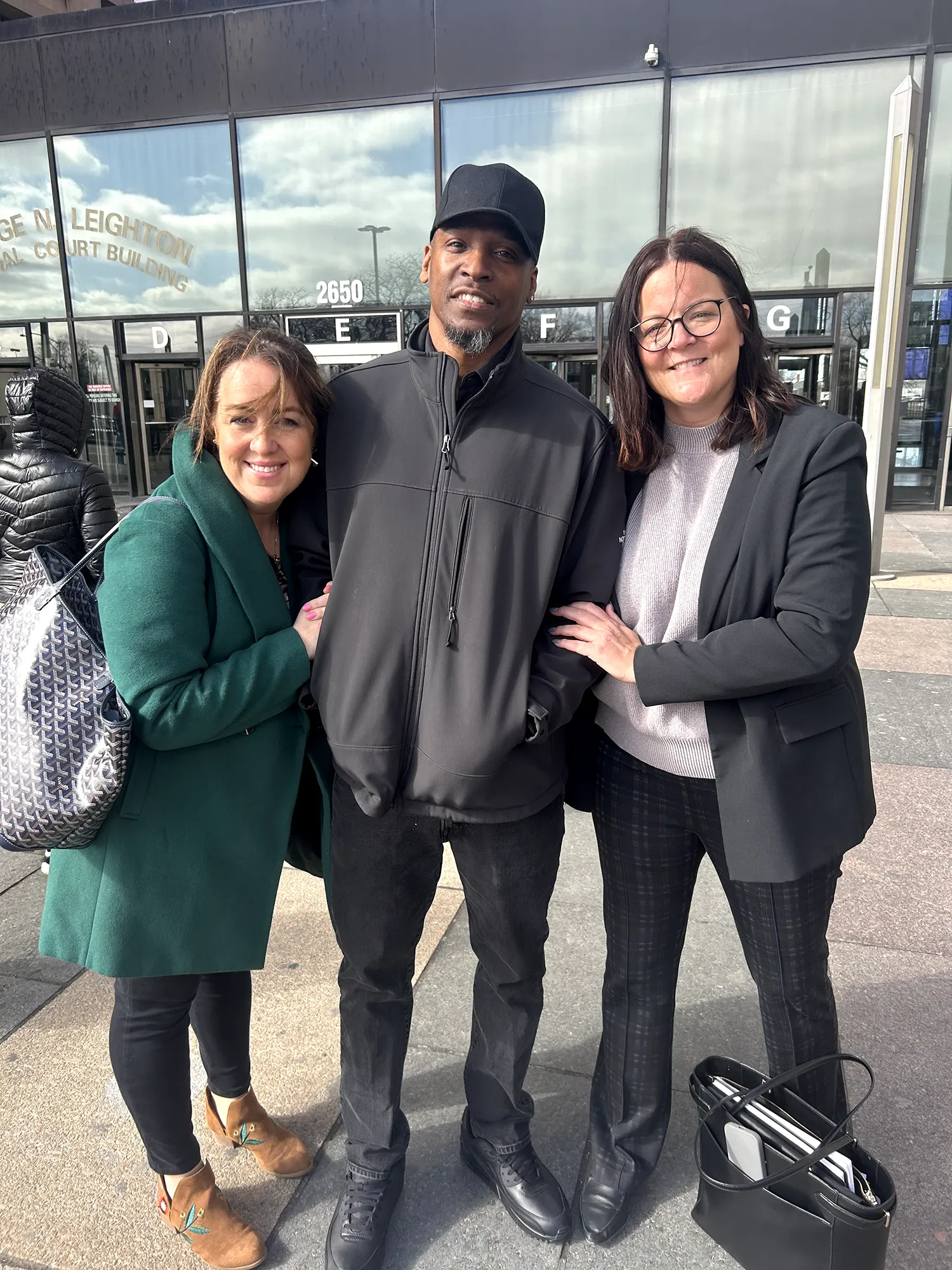
In March 2025, Cook County Judge Alfredo Maldonado, by agreement with the Cook County State’s Attorney's Office, vacated Jerry's wrongful conviction, dismissing all charges and fully exonerating him.
“Jerry was just a child when he was wrongfully imprisoned,” Leanne said. “He and his family are overjoyed about his exoneration. Their journey through the justice system has taken way too long. We appreciate the efforts made by the Cook County State’s Attorney’s Office to investigate this case and for their willingness to right this wrong after more than three decades.”
Following his exoneration, Jerry said, "I feel overwhelmed and excited at the same time. It’s been a long, long journey. This inspires me to go forth even stronger, to get involved in teens’ lives like I’ve been wanting to do, to give to others. People who do this work give … I want to be a giver, too."